Green Energy Tokenization: The Future of Profitable Sustainability

Introduction
In the race to combat climate change and transition to cleaner energy sources, innovation is key. One such innovation gaining serious traction is green energy tokenization, the process of converting renewable energy assets into digital tokens using blockchain technology. This concept bridges sustainability and profitability, enabling investors, developers, and consumers to participate in and benefit from the green energy revolution like never before.
As the world increasingly moves toward sustainable investment strategies,stakeholders in the energy sector are exploring smarter ways to make clean energy accessible, accountable, and profitable. Tokenization allows for fractional ownership, decentralized funding, and real-time trading of renewable energy assets, transforming the industry and redefining the energy economy for the 21st century.
This blog delves into how green energy tokenizationis reshaping sustainability, and why it represents a golden opportunity for those seeking both planet-positive impact and strong financial returns
Understanding Tokenization in the Energy Sector
What Is Tokenization?
Tokenization is the process of converting rights or ownership of a physical or digital asset into a blockchain-based token. These tokens can represent virtually anything, from art to real estate, and increasingly,renewable energy units such as kilowatt-hours (kWh).
Green Energy + Tokenization = Disruption:
In the energy context, tokenization allows renewable energy producers to issue digital tokens backed by the electricity they generate. These tokens can then be traded, held, or redeemed, essentially creating a new asset class: green energy tokens.
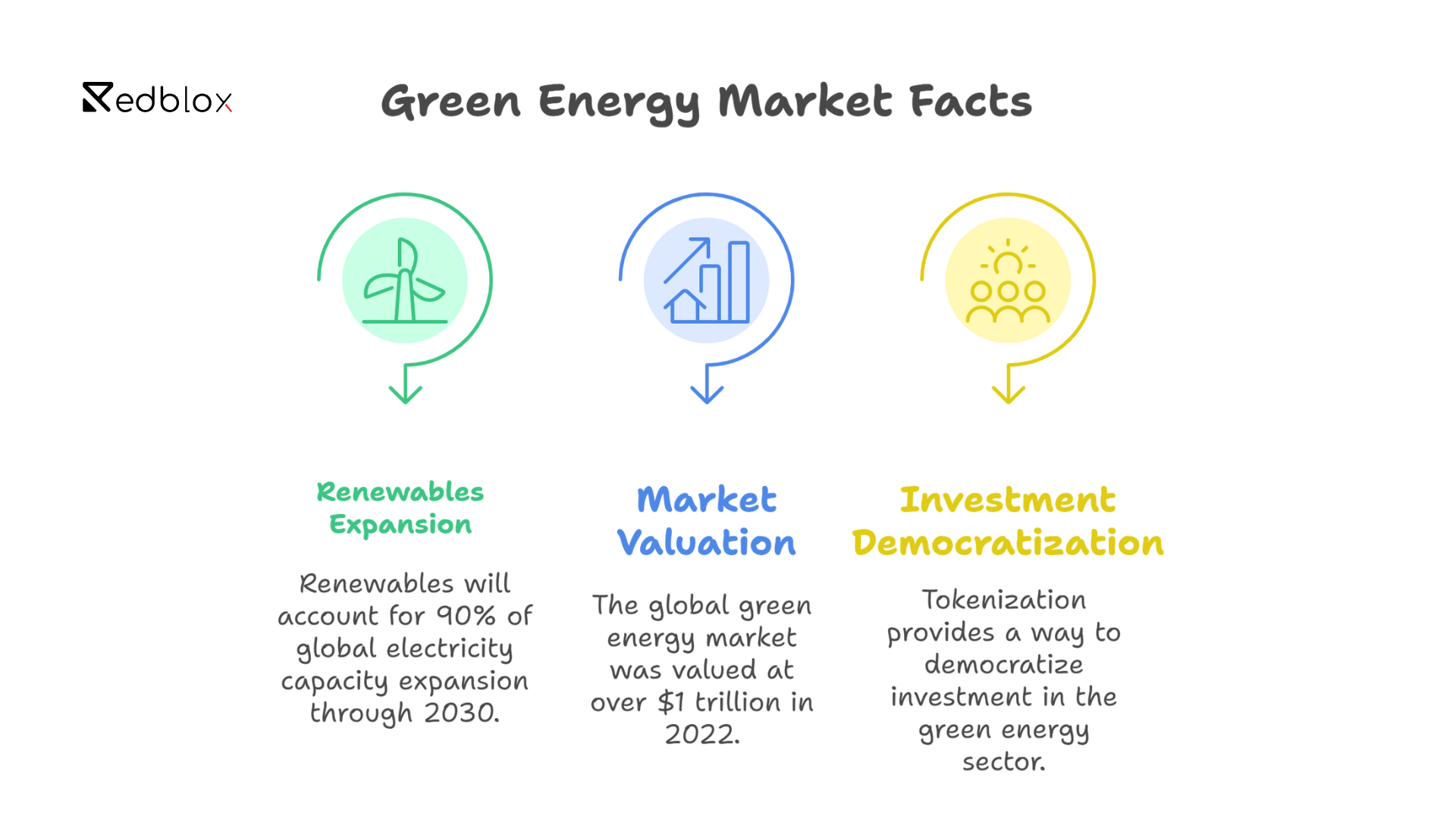
The Role of Blockchain Technology
Blockchain is the technological backbone of energy tokenization. Without blockchain’s decentralized, secure, and transparent nature, the concept wouldn’t be possible.
Why Blockchain Matters in Energy Tokenization
- Transparency: Every transaction is recorded and visible on the blockchain ledger.
- Security: Cryptographic protocols protect ownership data and prevent fraud
- Efficiency: Blockchain automates verification, settlement, and tracking of energy assets.
Also Check Blockchain in Healthcare: Transforming Medical Records and Data Management
Blockchain in Renewable Energy: Market Snapshot
- Over 60 global energy companies are piloting or implementing blockchain-powered projects.
- The blockchain in energy market is expected to grow from $500M in 2021 to over $6B by 2030 (Allied Market Research).
- Major players include Power Ledger, WePower, and LO3 Energy, each demonstrating real-world use cases for tokenized energy.
Profitability of Green Energy Tokenization
Tokenizing renewable energy isn’t just good for the planet. It’s a new financial frontier
Revenue Models and Investment Opportunities
- Energy-as-a-token: Consumers buy tokens representing future energy usage.
- Peer-to-peer energy trading: Token holders can sell or trade unused energy.
- Microgrid investments:Tokenization opens localized energy generation projects to global investors.
- Carbon credit trading: Tokenized energy systems can integrate with carbon credit markets for added profitability.
Real-World Case Studies
- Power Ledger (Australia): Allows households to trade excess solar energy using tokens on the blockchain.
- WePower (Lithuania): Enables corporate buyers to invest directly in green energy projects via energy tokens.
- Solcrypto (South Korea): Tokenizes solar energy from commercial rooftops for public investment.
Market Trends & Future Outlook
- Rising ESG mandates and sustainability goals are driving institutional interest
- Venture capital is flowing: Over $3B invested in energy blockchain startups in the past 5 years
- Tokenized assets in renewable energy are predicted to hit $400B by 2030.
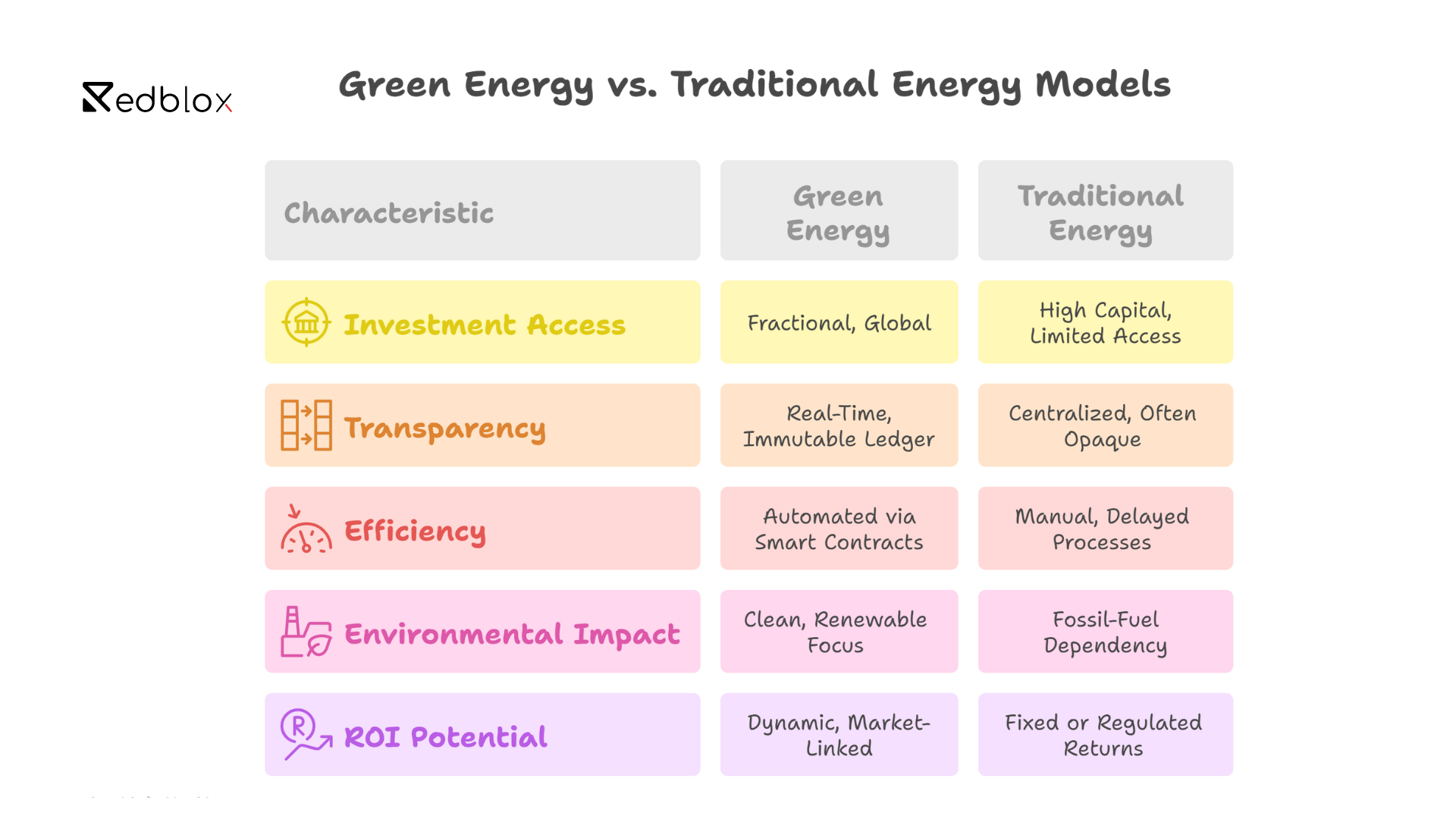
Comparative Analysis with Traditional Energy Models
Barriers to Tokenization Adoption
- Lack of regulatory clarity in many regions
- Technological literacy gap among energy developers
- Integration with existing utility infrastructure
Benefits of Green Energy Tokenization
For Consumers
- Buy green energy directly
- Reduce bills via peer-to-peer trading
- Track energy source and impact
For Businesses
- Lower entry barriers for investing in renewables
- Transparent ESG reporting
- Flexible power purchasing options
For the Environment
- Faster adoption of renewables
- Reduced carbon emissions
- Community-driven energy initiatives
Empowering Projects & Communities
- Community solar projects funded via tokens
- Crowd ownership of wind farms and hydro plants
- Citizens become prosumers: both producers and consumers of energy
Challenges and Considerations
Key Challenges
- Regulatory uncertainty: Varying laws across regions
- Token volatility: Price swings can impact confidence
- Scalability: Requires robust digital infrastructure
Potential Solutions:
- Collaborate with regulators to build supportive frameworks
- Use stablecoins or fiat-pegged tokens for price stability
- Partner with established blockchain platforms for scalability
Legal & Regulatory Watch
- EU’s MiCA regulation could help standardize the token space
- U.S. SEC’s evolving stance may influence energy token projects
- Emerging markets like UAE, Singapore, and India are blockchain-forward
Future Prospects and Innovations
What’s Coming Next?
- Integration with smart grids and IoT for real-time energy balancing
- AI + Blockchain for predictive energy trading and pricing
- NFTs for energy ownership and proof of renewable consumption
- Green bonds + tokens for climate finance
Role of Companies like Redblox Technologies
Redblox Technologies is at the forefront of building custom blockchain and AI-powered platforms that can support green energy tokenization. From smart contract development to secure energy token exchanges, companies like Redblox are enabling both startups and governments to make tokenized energy a scalable reality.
If you're a clean energy entrepreneur, developer, or investor, Redblox can help you design and launch your own green energy tokenization system.Ready to make an impact and a profit? Now is the time to get involved in the tokenized green energy revolution
Whether you're a renewable energy project owner, clean-tech startup, or investor looking to make sustainable choices with real returns, Redblox Technologies has the tools, tech, and talent to support your vision.
Visit Redblox.io to explore how we can help you build a secure, scalable, and sustainable future with blockchain-powered green energy solutions.
Conclusion
Green energy tokenization is more than a trend. It’s a movement that aligns environmental responsibility with financial innovation. By enabling transparent, inclusive, and efficient investment in renewables, it empowers individuals and institutions to actively participate in shaping a sustainable world.
As blockchain matures and renewable energy continues to dominate energy growth globally,tokenization will become a cornerstone of how we produce, consume, and invest in power.
Together, with forward-thinking solutions from companies like Redblox Technologies, we can build a profitable, inclusive, and greener tomorrow.
FAQs
What is green energy tokenization and how does it work?
Green energy tokenization is the process of converting renewable energy assets, such as solar or wind power, into digital tokens on a blockchain. These tokens represent a specific amount of energy or ownership in an energy project. Token holders can trade, invest, or redeem them, creating a transparent, decentralized, and efficient way to fund and manage green energy initiatives.
How does blockchain technology support energy tokenization?
Blockchain ensures transparency, security, and immutability in energy transactions. It allows all participants (producers, consumers, and investors) to track energy generation, distribution, and ownership in real time. Smart contracts automate processes like billing and energy trading, while the decentralized nature of blockchain reduces reliance on intermediaries and minimizes fraud.
What are the benefits of tokenizing renewable energy?
- Fractional ownership, making it easier for small investors to participate
- Improved transparency in how energy is produced and consumed.
- Decentralized trading, reducing costs and improving access.
- Faster fundraising for green energy projects.
- Increased community involvement and localized energy generation.
Are there real-world examples of green energy tokenization?
Yes. Companies like Power Ledger in Australia and WePower in Europe have successfully implemented tokenized energy models. Power Ledger allows households to trade excess solar energy using blockchain-based tokens, while WePower enables businesses to pre-purchase future energy production from green sources using digital tokens
What challenges does green energy tokenization face today?
- Regulatory uncertainty, as many countries lack clear laws around energy tokenization.
- Technical complexity, especially in integrating blockchain with existing grid infrastructure.
- Market education, since many stakeholders are unfamiliar with blockchain. However, with growing interest from both governments and investors, these challenges are steadily being addressed through pilot projects and evolving regulations.
Fill your details below and get in touch with our domain experts
Start a conversation

+91 7550051204

contact@redblox.io

Book 1:1 Meeting with Redblox

@redblox_technologies