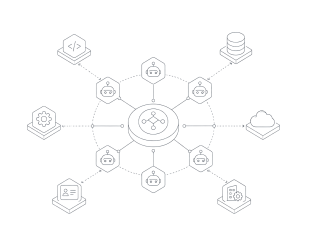
Scalable AI Infrastructure
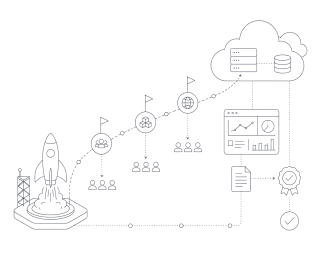
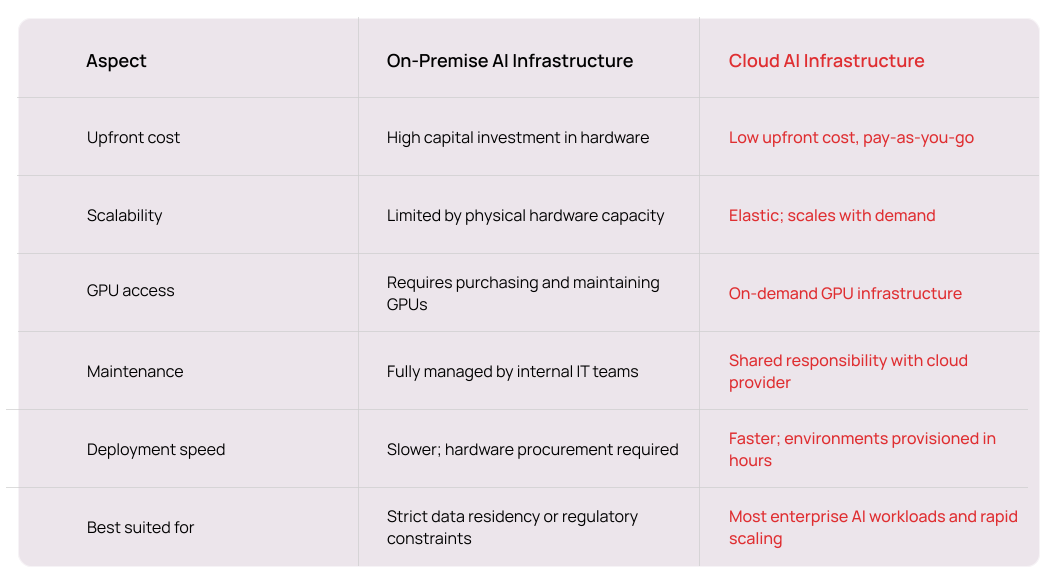
Infrastructure that expands and contracts with demand, so organizations pay for the compute they use rather than preparing for peak load year-round. This supports cost control during slow times and dependable performance during moments of high traffic.
CI/CD for Machine Learning
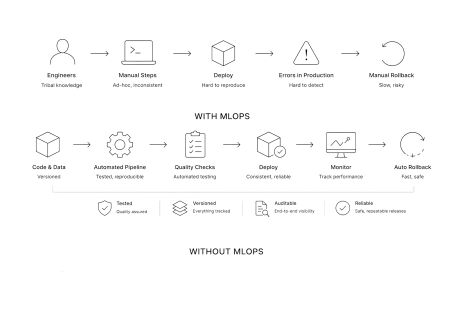
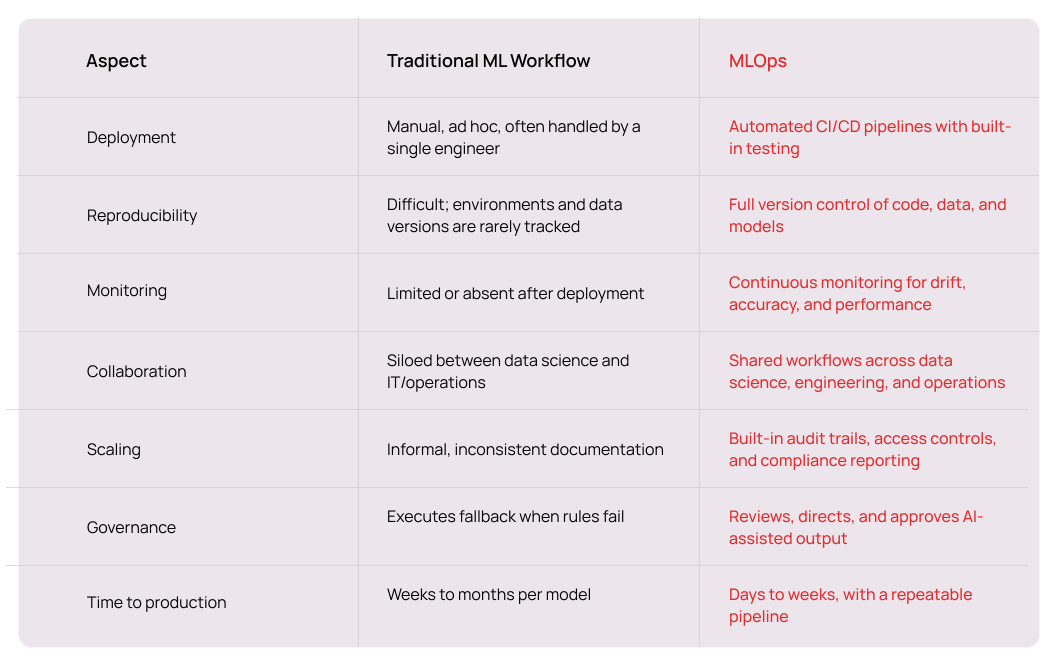
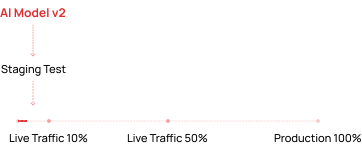
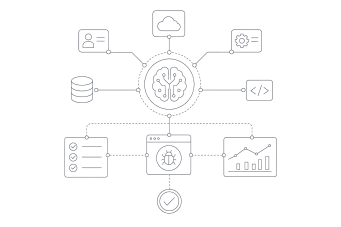
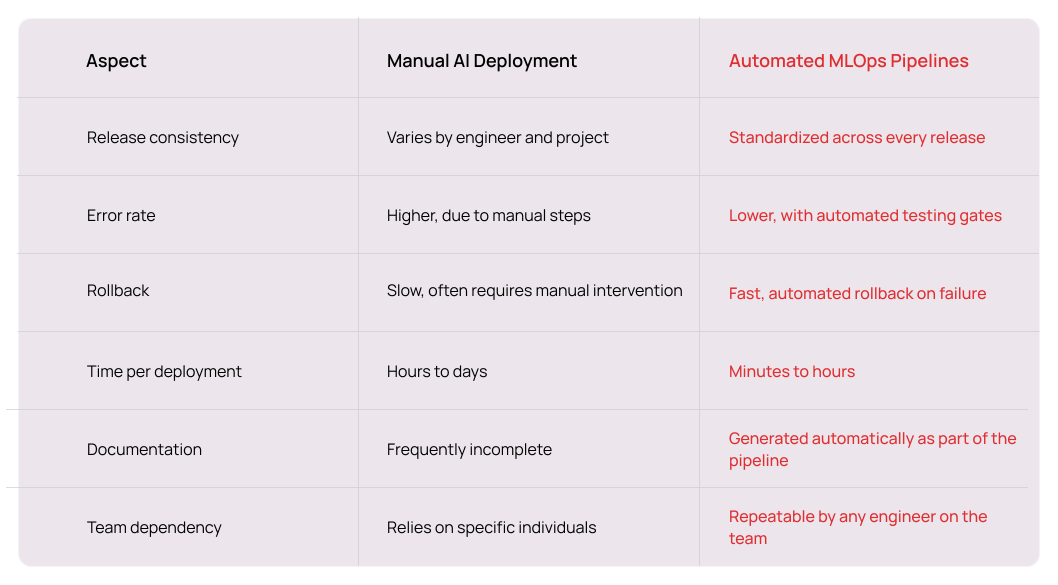
In the same manner that contemporary software teams deploy code, automated pipelines that test, validate, and deploy model modifications cut the time between a training model and a live one and minimize human error.
Model Version Control
Each model is versioned and traceable, as are the data and code used to create it. Teams are able to pinpoint the precise change and confidently roll back if a new version performs poorly.
Automated Model Retraining
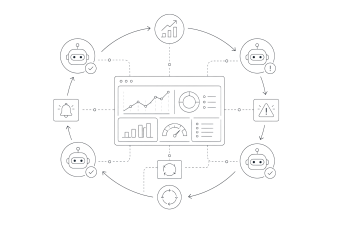
As the world evolves, models degrade. Without the need for an engineer to observe and take human action, automated retraining pipelines identify performance declines or data drift and initiate retraining.
AI Monitoring & Observability
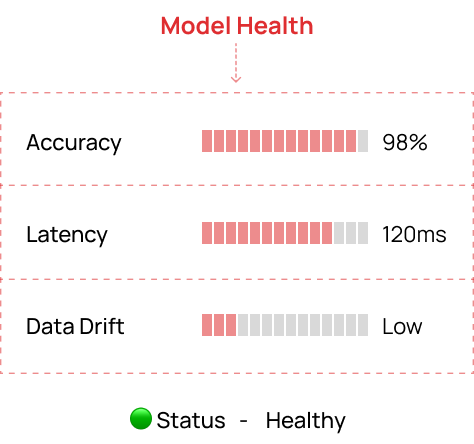
AI observability provides teams with an early warning system for issues that generic infrastructure monitoring would overlook by tracking prediction quality, input data distributions, and business-relevant outcomes in addition to simple uptime checks.
Feature Store Management
A centralized feature store ensures the same, correctly computed features are used consistently across training and inference, preventing subtle mismatches between testing and production.
Experiment Tracking
Every training run's parameters, data, metrics, and outcomes should be systematically tracked so that teams may compare experiments impartially and replicate the most successful one.
GPU Infrastructure
Right-sized GPU provisioning for training and inference workloads, balancing performance needs against cost, and scaling GPU capacity up or down as workloads change.
Kubernetes & Container Orchestration
Kubernetes for AI workloads standardizes how models are packaged, deployed, and scaled, giving infrastructure teams a consistent way to manage everything from a single endpoint to hundreds of them.
Infrastructure as Code
Every environment is defined in code - using tools like Terraform, so infrastructure can be reviewed, versioned, and reliably recreated, rather than existing only as manual configuration.
Security & Compliance
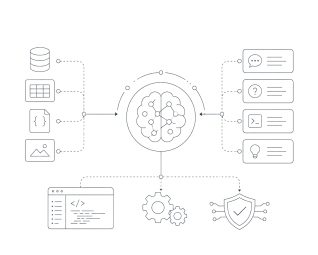
Security controls, encryption, and compliance documentation are built into the infrastructure itself, not bolted on after deployment, reducing both risk and the cost of retrofitting controls later.
Disaster Recovery & High Availability
AI systems that support critical business functions need redundancy and tested recovery plans, so an infrastructure failure does not become a business outage.